



…It’s for effective strategy—Founder
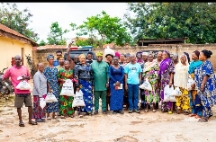
CITIZENS COMPASS— Many residents of Ado-Ekiti in Ekiti State have benefitted from the pilot palliative support programme organised by The Kayode Olasekun Foundation (KOF).
The recently held pilot scheme was meant to ameliorate the economic situation in the country.
Among the beneficiaries were widows, students, single mothers, elderly people, vulnerable individuals and families, as well as other people requiring support to cope with the increasing pressures of everyday living.
The exercise witnessed the distribution of palliative items to beneficiaries as the Foundation sought to provide immediate relief while also obtaining a clearer understanding of the challenges confronting people at the grassroots.
The initiative forms part of the humanitarian vision of KOF, a charitable organisation committed to touching lives, providing hope and supporting vulnerable members of society through humanitarian assistance and empowerment programmes.
Speaking, the Founder of the Foundation, Francis Kayode Olasekun, said the Ado-Ekiti programme was deliberately designed as a pilot scheme to enable the organisation to study the needs of beneficiaries and develop a more effective strategy for subsequent interventions.
According to him, the Foundation recognises that the economic difficulties facing many households require not only compassion but also properly planned and sustainable interventions.
Olasekun said the turnout and experiences shared during the programme demonstrated that many people are facing genuine difficulties that may sometimes go unnoticed.
“What we witnessed during the outreach confirmed that there are many people within our communities who genuinely need support,” he said.
“For some families, what may appear to be a small palliative package can make a meaningful difference in their daily lives. It can provide a meal, ease a burden and, most importantly, remind someone going through a difficult period that society has not forgotten them.”
He explained that although the immediate objective of the programme was to provide palliative assistance, KOF intends to look beyond the distribution of food and other materials by exploring programmes capable of creating more sustainable opportunities for vulnerable people.
‘It Is About Humanity’
Olasekun also stressed that the activities of the Foundation are driven by humanitarian considerations rather than political interests or the pursuit of personal recognition.
“This programme is not about politics, publicity or personal recognition,” he said.
“It is about humanity , reaching out to people, giving hope and reminding them that they are not forgotten.
“We believe that society becomes stronger when people who are in a position to help are willing to reach out to those experiencing difficult circumstances. We may not be able to solve every problem at once, but every genuine intervention can make a difference in somebody’s life.”
He added that the Foundation would continue to encourage individuals, organisations and other stakeholders to recognise the importance of collective responsibility in addressing poverty and vulnerability within communities.
Pilot Programme to Guide Future Interventions
The Foundation said one of the major objectives of the Ado-Ekiti exercise was to gather practical experience that would guide the planning and implementation of future humanitarian programmes.
Rather than treating the event as a one-off distribution exercise, KOF intends to assess the lessons from the programme, identify areas requiring improvement and develop an approach capable of reaching a larger number of beneficiaries.
Olasekun said the Foundation hopes to progressively expand its humanitarian activities to reach more communities across Ekiti State as resources and partnerships become available.
He noted that future programmes could place greater emphasis on empowerment and initiatives designed to help beneficiaries become more economically independent.
According to him, while palliatives can provide important immediate relief, sustainable empowerment remains essential to breaking the cycle of hardship and dependency.
KOF also expressed appreciation to its members, volunteers, friends, supporters and well-wishers who contributed in different ways towards the success of the outreach.
The Foundation noted that humanitarian work requires collective effort and that the contributions of individuals who provided resources, time, encouragement and logistical assistance were instrumental to the successful implementation of the pilot programme.
Olasekun said the organisation remains grateful to everyone who identified with the humanitarian vision of the Foundation.
He also encouraged individuals and organisations interested in humanitarian development to collaborate with credible initiatives aimed at improving the welfare of disadvantaged members of society.
Looking Beyond Ado-Ekiti
Following the successful completion of the pilot exercise, the Foundation said attention would now turn towards evaluating the programme and developing its next phase of activities.
KOF hopes that lessons from the Ado-Ekiti outreach will provide a framework for reaching more vulnerable individuals and families across Ekiti State and, ultimately, other communities where assistance may be required.
The Foundation reiterated that its long-term objective is not simply to distribute palliatives but to contribute meaningfully towards humanitarian assistance, empowerment and the restoration of hope among people experiencing difficult circumstances.
For Olasekun, the success of the pilot programme represents the beginning of a broader humanitarian journey.
He said the Foundation would continue to work within its available resources while building relationships with individuals and organisations that share its commitment to improving lives.
The Kayode Olasekun Foundation said it would remain guided by its motto, “Touching Lives, Spreading Hope,” as it develops programmes aimed at ensuring that vulnerable members of society are supported, encouraged and given opportunities for a better future.
Speaking on behalf of vulnerable women and other beneficiaries who attended the outreach, Mrs Fasakin Angela Kemisola expressed appreciation to the Kayode Olasekun Foundation for the distribution of food items and cash gifts, describing the intervention as timely and encouraging.
She said the beneficiaries were particularly impressed that the Foundation had chosen to support vulnerable people despite its founder not holding any political or government position.
“I am Mrs Fasakin Angela Kemisola, and I am speaking on behalf of all of us who are here today to receive food items and cash gifts from the Kayode Olasekun Foundation. We say a very big thank you,” she said.
“Before now, we had heard a lot about Kayode Olasekun’s generosity and his efforts in helping Nigerian youths secure employment opportunities. Today, you have extended that same hand of kindness to us, the less privileged and vulnerable people in Ekiti State, and we sincerely appreciate you.
“We were particularly surprised and encouraged that, despite not being a politician or government official, you still deem it necessary to use your personal initiative to support vulnerable people.
“We appreciate what you have done, and we encourage you and the Foundation to continue this good work. May God continue to bless you, sir,” Mrs Fasakin said.
Her remarks reflected the mood of several beneficiaries at the programme, many of whom expressed appreciation for the assistance and called on the Foundation to sustain and expand the initiative.
The testimony further reinforced the Foundation’s position that the pilot programme was not merely about distributing palliatives, but about understanding the circumstances of vulnerable people and developing a sustainable humanitarian intervention capable of reaching more communities across Ekiti State.