




…States how activists can hold government accountable
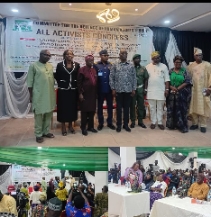
By Bose Adelaja & Eniola Rosanwo
CITIZENS COMPASS— The Committee for the Defence of Human Rights (CDHR) on Thursday warned Nigerians against using activism as a tool to target perceived political and religious opponents in pursuit of selfish interests.
The National President of CDHR, Debo Adeniran, gave the warning in Lagos while welcoming participants to a public lecture organised by the organisation.
Adeniran noted that human rights activists could not effectively hold the government accountable if their arguments were based primarily on sentiments, assumptions and personal conjecture rather than sound knowledge and established principles.
The lecture, themed “Understanding Human Rights Beyond Emotions and Personal Interests,” was organised to address some of the challenges associated with the use and interpretation of human rights in Nigeria.
Adeniran urged human rights activists to critically examine their understanding of human rights, the principles guiding their advocacy and the standards they apply when assessing the actions of individuals, institutions and government.
Citizens Compass reports that Adeniran also serves as the Secretary of the CDHR Board of Trustees (BoT), in addition to his position as national president.
According to him: For quite some time, we have observed that many Nigerians across different categories, demographics, social backgrounds, and sociopolitical statuses do not seem to fully understand the concept of human rights.
Unfortunately, this includes some of us who parade ourselves as activists of different shades and persuasions. Too often, human rights are interpreted through the narrow lenses of personal opinions, emotional reactions, political affiliations, religious convictions, ethnic sentiments, or individual interests rather than through established principles of law, justice, and universal human dignity.
In many instances, people tend to portray human rights according to what they like rather than what is right. They vigorously defend what favours them while condemning the same principles when those principles do not serve their interests. Some people even demand rights to which they are not legally or morally entitled, while failing to recognise the legitimate rights of others. This selective understanding of human rights undermines the very principles we claim to defend.
Human rights are not privileges reserved for the powerful, the popular, the wealthy, or those with whom we share political, religious, ethnic, or ideological sympathies. Neither are they instruments to be deployed selectively against perceived opponents. They are inherent entitlements grounded in the dignity of every human being, subject to the applicable legal frameworks governing their exercise and protection.
It is therefore important that we understand the distinction between what we personally desire and what the law recognizes as a right. We must also appreciate the difference between defending a person’s fundamental rights and endorsing every opinion, decision, conduct, or demand that the person makes. The fact that we sympathize with someone does not automatically make that person’s position legally or morally correct. Likewise, our disagreement with another person’s views does not justify the violation of their fundamental rights.
Purpose of the lecture
Distinguished guests, one of the concerns that informed the organisation of this public lecture is the apparent lack of adequate familiarity with established human rights instruments among sections of our society, including some individuals who actively engage in human rights advocacy. These instruments include the Universal Declaration of Human Rights, the International Covenant on Civil and Political Rights, the International Covenant on Economic, Social and Cultural Rights, the African Charter on Human and Peoples’ Rights, and other relevant international and regional conventions, as well as applicable national laws, particularly the Constitution of the Federal Republic of Nigeria.
While these instruments may differ in their legal status, scope, and enforcement mechanisms, they collectively provide important foundations for understanding the rights, freedoms, duties, and responsibilities of individuals, institutions, and governments.
How can we effectively defend human rights if we do not adequately understand their legal foundations, their scope, their limitations where applicable, and the mechanisms available for their protection and enforcement? How can we hold the government accountable to its human rights obligations if our arguments are based primarily on sentiments, assumptions, or personal conjectures rather than sound knowledge and established principles?
These questions make it imperative for us to begin, from our own little corner, a deliberate process of enlightening society about the true meaning, scope, and application of human rights. As an organisation with a longstanding commitment to the defence of human rights, CDHR recognises that the responsibility for this enlightenment must not rest exclusively on government institutions, the courts, or academic experts. Civil society organisations, community leaders, the media, educators, and, most importantly, human rights activists must play their respective roles.
Indeed, those who are generally regarded as activists must be willing to lead by example. We must move beyond the mere use of the title of an activist to embrace the discipline, knowledge, integrity, objectivity, and courage that genuine human rights advocacy demands. Activism must be informed by facts, guided by law, anchored in universal principles, and directed towards the protection of human dignity rather than the advancement of personal interests.
Citizens will become better equipped to identify violations, seek appropriate remedies, respect the rights of others, and resist manipulation by individuals who exploit human rights language for selfish or political purposes. It will also encourage a culture in which disagreements are resolved through lawful and peaceful means rather than intimidation, mob action, or violence.
We are not gathered here merely to exchange opinions or reinforce what we already believe. We are here to learn, to question our assumptions, to broaden our understanding, and, where necessary, to correct our misconceptions about human rights.
At CDHR, we remain firmly committed to providing platforms and opportunities for the growth and development of our members and members of the general public. We believe that the defence of human rights is strengthened when individuals are informed, empowered, and equipped with the knowledge and skills required to contribute meaningfully to society.
In his keynote address, Prof. Toyin Ogundipe, former Vice-Chancellor of the University of Lagos (UNILAG), frowned at the rampant abuse of human rights among Nigerians, particularly in the area of security, warning perpetrators to desist from the obnoxious behavior.
Ogundipe urged government at all levels to desist from abuse of fundamental human rights against innocent people for speaking against the ills in society.
He said: The government is supposed to protect the people and make the country safe. We must be disciplined and work with the right people to make things right in Nigeria.
We must also have evidence to support whatever we are saying. If we make claims about any issues, we should be able to provide proof to defend what we are talking about.