


CITIZENS COMPASS— The Council Chairman of Igbogbo/Baiyeku Local Council Development Area (IBLCDA), Ikorodu Division in Lagos State, Omo’ba Hammed Olalekan Aroyewun has called for the database of non-Nigerians residing within the area.
Aroyewun called for stronger intelligence-led security measures and greater inter-agency collaboration to address emerging security concerns within the council area.
He recently gave the call while hosting a high-level security meeting at the Council Conference Room.
The call became necessary following growing security threats in some parts of Nigeria.
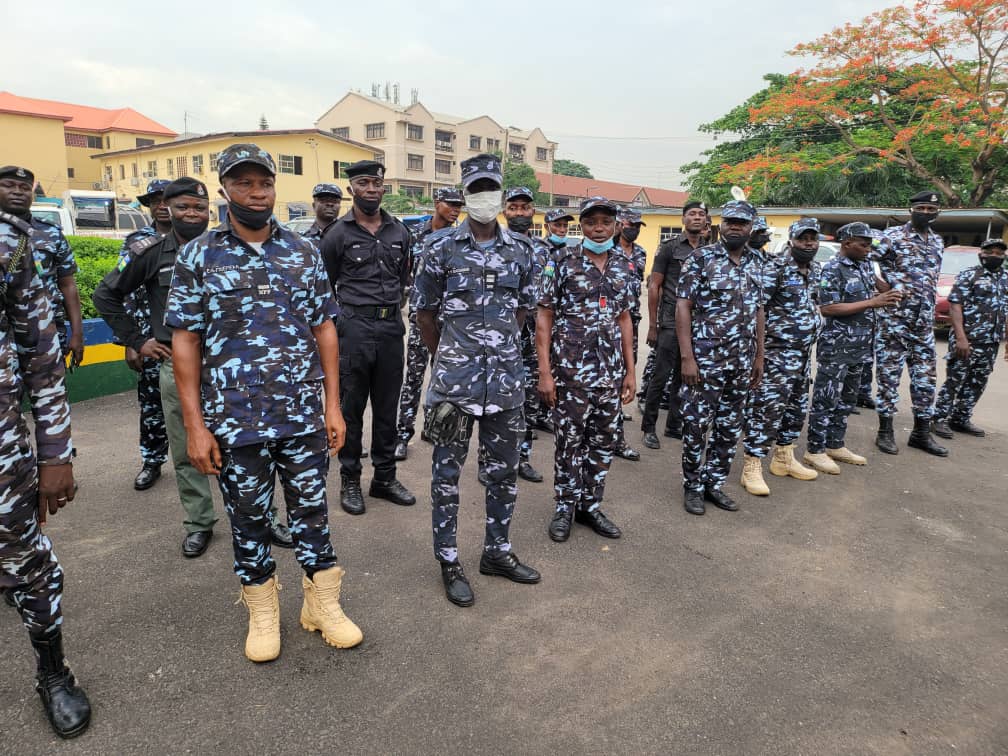
The meeting brought together top security personnel, including representatives of the Nigeria Police Force, the IBLCDA Joint Task Force (JTF), the Department of State Services (DSS), the Nigerian Security and Civil Defence Corps (NSCDC), the Lagos Neighbourhood Safety Corps (LNSC) as well as members of the Adeboruwa-in-Council, Olubeshe-in-Council, Community Development Committee (CDC), religious leaders, market leaders, youth organisations, and other critical stakeholders.
A major focus of the meeting was the growing influx of foreign nationals into the council area and the need for improved documentation and monitoring. Aroyewun disclosed that his administration had commenced engagements with resident leaders within affected communities and had resolved to compile a comprehensive database of all foreign nationals across the LCDA.
Describing the issue as one of the key concerns necessitating the meeting, the Chairman stressed the importance of coordinated intelligence gathering and information sharing among security agencies. He warned that agencies operating in silos would undermine efforts to effectively tackle security challenges and maintain public safety.
While commending security operatives for neutralising a recent security threat within the council area, Aroyewun maintained that routine patrols alone were no longer sufficient. He called for sustained operational alertness driven by deliberate policy actions, proactive interventions, and decisive measures aimed at preventing insecurity before it escalates.
The Chairman also identified the spread of fake news and unverified information as a growing threat to public safety. According to him, misinformation fuels panic, undermines security operations, and weakens public confidence, particularly when false narratives spread faster than verified information.
To address the challenge, he directed security agencies and the CDC to intensify public sensitisation efforts, provide timely and verified updates to residents, and educate communities on identifying and reporting false information before it gains traction.
Responding on behalf of the security agencies, CSP Akinola Clement, Divisional Police Officer (DPO), Ikorodu Division, assured residents that the Nigeria Police Force would remain committed to its constitutional responsibilities. He pledged to strengthen collaboration with the JTF, DSS, NSCDC, and other sister agencies, while deepening engagement with traditional institutions and the CDC.
CSP Clement also urged the CDC to enforce regulatory compliance and sustain regular security meetings, describing continuous community participation as essential to maintaining peace and security at this critical time.
Other stakeholders, including the DSS representative, Mr. Joel Adisa; the JTF Commander, Oludare Igbasan; the CDC Chairman, Alhaji Ibiyeye Rasaq; and the NSCDC representative, Officer Odunayo Seyi, expressed support for data-driven security initiatives, coordinated enforcement operations, and the introduction of new bye-laws to strengthen community safety.
Mr. Adisa urged the Chairman to pursue a bye-law that would hold landlords accountable for enabling criminal activities on their premises.
Alhaji Ibiyeye Rasaq disclosed that no-entry directives had already been issued to restrict scavengers from operating in sensitive areas, while Officer Odunayo Seyi backed the introduction of formal bye-laws to reinforce territorial compliance and support enforcement efforts.
The meeting concluded with a collective commitment by security agencies, traditional institutions, community leaders, and stakeholders to strengthen intelligence gathering, deepen inter-agency collaboration, intensify community sensitisation, and support security initiatives through appropriate legislative measures.