

By Bose Adelaja & Alao Adesoji
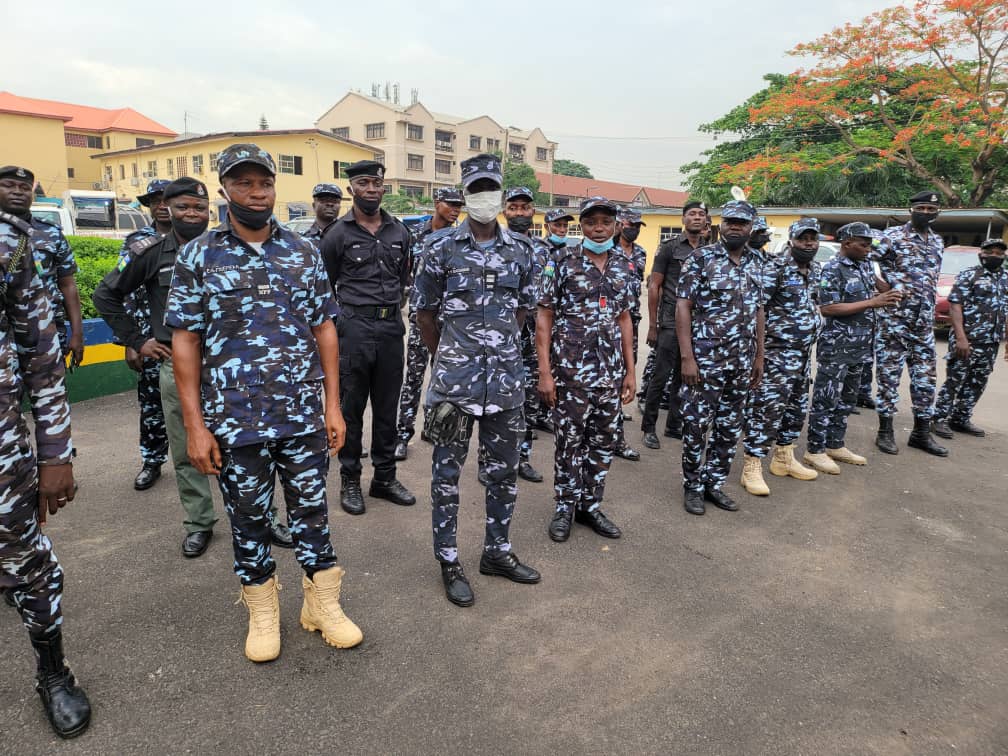
CITIZENS COMPASS— The Lagos Environmental Sanitation Corps (LAGESC), popularly known as Kick Against Indiscipline(KAI), on Tuesday, sought stakeholders’ cooperation on voluntary environmental compliance across the State.
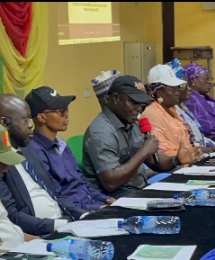
LAGESC sought this at the Lagos East and Central Senatorial Division Stakeholders’ and Community Engagement Meeting held at the Multipurpose Hall, Multi-Agency Safety Arena Complex, Bolade-Oshodi in Lagos.
Speaking, Major Olatunbosun Olaniyi Cole (Rtd), Corps Marshal of the agency, said the meeting became necessary as LAGESC is the premier enforcement Agency charged with the responsibility of enforcing environmental sanitation laws in the State.
Olatunbosun said the theme, “Strengthening environmental sanitation through effective enforcement and stakeholder collaboration, was geared towards ensuring a cleaner Lagos.
The Corp Marshal urged the stakeholders to ensure that Lagos remains clean, safe, orderly, and conducive for living and business.
According to him: Over the years, the gains of successful yearly stakeholder engagements like this further reinforces our unyielding dedication to strengthen collaboration, deepen community ownership, and consolidate on existing discussions aimed at reducing environmental infractions across Lagos State which aligns with the THEMES+ Agenda of Mr. Governor, Babajide Olusola Sanwo-Olu, particularly the commitment to making Lagos habitable, resilient, and attractive for business.
At KAI, we uphold the belief that environmentally best practices lie not only in the hands of the government which echoes the big truth that it is a shared obligation that requires the active participation of community leaders, traders, transport operators, residents, and all stakeholders present here today.
At LAGESC, we firmly believe that environmental sanitation is not the sole responsibility of the government. The theme guiding today’s engagement is “Strengthening Environmental Sanitation Through Effective Enforcement and Stakeholder Collaboration” This theme reflects our collective resolve to strengthen adherence to environmental regulations through awareness, cooperation, and responsible civic behaviour. Compliance, when embraced by communities, reduces the need for enforcement and promotes sustainable environmental orderliness.
Throughout the year 2025, LAGESC intensified enforcement operations across major highways, inner roads, markets, pedestrian bridges, and public spaces. These operations targeted street trading, illegal dumping of refuse, abuse of road setbacks, medians, drainage channels, and the unlawful occupation of pedestrian bridges.
We also sustained the enforcement of the ban on Styrofoam food containers, which remain a major contributor to blocked drainage systems and flooding. Given their non-biodegradable and non-recyclable nature, Styrofoam products pose serious environmental and health risks. We therefore encourage the use of environmentally friendly alternatives.
In furtherance of our mandate, thousands of offenders were apprehended and prosecuted in accordance with the law. These actions are corrective, not punitive, and are aimed at instilling discipline, safeguarding public spaces, and improving compliance.
However, enforcement alone cannot achieve our desired results.
To truly build a cleaner Lagos that is habitable for business and safe for residents, we must all adopt positive environmental practices. These include proper waste disposal through approved PSP operators, prompt payment of waste bills, recycling, routine environmental sanitation, and collective vigilance against environmental abuse.
Communities remain vital drivers of compliance. Through advocacy, sensitisation programmes, community clean-up exercises, and the education of our children on hygiene and cleanliness, we can entrench a culture of environmental responsibility that outlives enforcement.
Collaboration remains essential. By strengthening partnerships with local governments, traditional institutions, market leaders, transport unions, civil society organisations, and the private sector, we can pool resources, share intelligence, and address environmental challenges more effectively.
As we approach the new year, I urge all stakeholders to continue supporting the State’s smart waste management initiatives and to promptly report environmental infractions for swift response and corrective action.
In conclusion, building a cleaner Lagos requires collective commitment and improved compliance with environmental sanitation laws. Every lawful action taken by residents contributes to the safety, health, and prosperity of our State.
Also speaking, the Permanent Secretary, Office of Environmental Services, Dr. Gaji Omobolaji Tajudeen commended the leadership of LAGESC, under Major Olatunbosun Olaniyi Cole (Rtd), for convening the meeting.
According to the Permanent SecretaTajudeen: One of the significant environmental initiatives of the State Government this year has been the reintroduction of the monthly Environmental Sanitation Exercise. The exercise returned in April 2026 after several years, with the objective of restoring a culture of routine environmental cleanliness and community participation across Lagos. The significance of this initiative goes beyond the restriction of movement on sanitation days.
It is about restoring a culture where households take responsibility for their surroundings, markets are kept clean, traders understand that public spaces must be respected, residents understand that drainage channels are not waste-disposal point and a culture where every Lagosian understands that environmental sanitation is a collective responsibility.
The State has also continued to strengthen waste management across Lagos. Through the Lagos Waste Management Authority and other relevant institutions, efforts are being intensified to + And we must ensure that waste that requires disposal is handled through approved channels. This is particularly important because indiscriminate waste disposal has consequences far beyond aesthetics.
It blocks drains, pollutes waterways, contributes to flooding, creates breeding grounds for disease, threatens public health. Therefore, every act of responsible waste disposal is an investment in the future of Lagos.
Another major priority of the State Government is flood management. As a coastal megacity, Lagos is particularly vulnerable to the effects of intense rainfall, rising water levels and climate change. The government has therefore continued to invest in drainage infrastructure, canal rehabilitation, flood-control interventions and the removal of obstructions from waterways.
KAI occupies a unique position in the environmental management architecture of Lagos State. Its officers are often the first point of contact between government and citizens on issues relating to street trading, obstruction of public spaces, illegal occupation of road setbacks, indiscriminate disposal, open defecation and other environmental infractions.
Over the years, KAI has continued to evolve. The Corps is no longer simply viewed through the narrow lens of enforcement. It is increasingly becoming an important instrument for environmental education, behavioural change, public enlightenment, community engagement and responsible enforcement. With its operational presence across the State, KAI remains a critical frontline institution in our collective effort to maintain environmental order.
One of the issues that has required sustained attention this year is street begging and destitution. The State Government recognises that this issue has both an environmental and a social dimension. Our concern is not simply that begging takes place in public spaces. We are also concerned about road safety, public order, child protection, human trafficking and the exploitation of vulnerable persons.
In a series of enforcement operations this year, KAI apprehended hundreds of beggars and destitute persons across different parts of Lagos for profiling and appropriate intervention. The approach has been to ensure that vulnerable persons are identified and referred for the appropriate social intervention, while minors receive particular attention and protection.
Also, Distinguished ladies and gentlemen, one of the most touching incidents recorded by KAI this year demonstrates exactly why environmental enforcement must always retain a human face.
During an operation around an illegal dumpsite along the Lagos-Badagry Expressway, KAI officers discovered four nursing mothers living with their babies in extremely deplorable conditions. The four mothers and their babies were rescued from the hazardous environment, and the necessary intervention was initiated to safeguard their wellbeing.
When we clear an illegal dumpsite, we are protecting lives. When we remove an obstruction from a drainage channel, we are protecting homes. When we enforce against dangerous roadside activities, we are protecting motorists and pedestrians. When we intervene where vulnerable mothers and children are living in hazardous conditions, we are protecting human dignity.
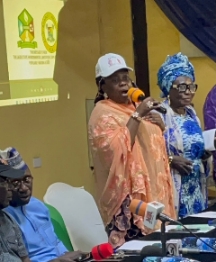
The Iyaloja of Lagos Island, Rodiat Adebayo, urged the Lagos Waste Management Agency (LAWMA), to be more active in its duty to keep the streets of Lagos clean.