


CITIZENS COMPASS— The Lagos State Traffic Management Authority (LASTMA) has passionately called on religious leaders to escalate faith-based advocacy for road safety, responsible motoring and uncompromising adherence to traffic regulations, underscoring the far-reaching moral authority of religious institutions in shaping societal attitudes, influencing behavioural patterns and safeguarding human lives.
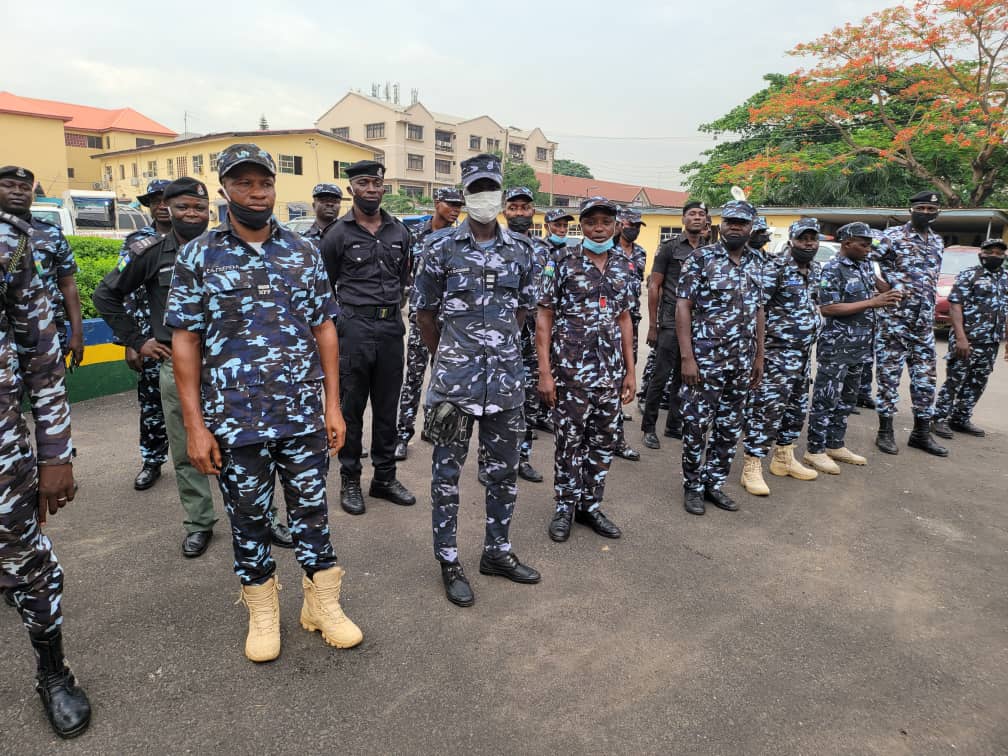
The General Manager of LASTMA, Mr. Olalekan Bakare-Oki, recently made this compelling appeal during the investiture, rebranding and induction of over 100 LASTMA Mayors (Volunteers), an initiative strategically designed to reinforce the Agency’s grassroots engagement architecture and complement its traffic management and control operations before, during and after the forthcoming Yuletide festivities across Lagos State.
Bakare-Oki emphasised the exceptional capacity of religious institutions as formidable instruments of moral suasion, civic reorientation and community mobilisation, particularly against the backdrop of persistent traffic indiscipline, flagrant violations of motoring regulations and avoidable road traffic fatalities.
He observed that religious leaders, by virtue of their considerable spiritual authority, extensive congregational networks and profound influence on public consciousness, occupy an indispensable position in complementing governmental interventions aimed at mitigating road traffic crashes, enhancing pedestrian protection and institutionalising civility among motorists and other road users.
According to the LASTMA helmsman, road safety enlightenment must transcend the confines of conventional governmental sensitization programmes and become an intrinsic component of sermons, Friday Jumu’ah congregations, Sunday worship services, fellowship meetings, youth assemblies and other religious engagements.
He consequently appealed to Christian and Muslim clerics, as well as other spiritual authorities, to consistently admonish their adherents against excessive speeding, reckless motoring, hazardous overtaking, driving under the influence of alcohol or intoxicating substances, distracted driving, indiscriminate parking, obstruction of traffic corridors and wilful disobedience to established traffic regulations.
The General Manager further maintained that the sanctity and inviolability of human life, a cardinal principle deeply entrenched in religious doctrines, must be translated into demonstrable responsibility, restraint and conscientious conduct on public highways.
He stressed that reckless driving, brazen disregard for traffic regulations and deliberate endangerment of other road users constitute more than mere statutory violations; they represent profound manifestations of civic irresponsibility, with potentially devastating consequences for innocent citizens, families and the wider society.
Bakare-Oki equally reiterated that the enormous responsibility of achieving sustainable traffic management cannot be exclusively shouldered by the government without the deliberate participation and sustained cooperation of critical stakeholders. He identified religious institutions, market associations, transport unions, community development associations and civil society organisations as indispensable partners in advancing a safer and more orderly transportation environment.
He therefore urged religious leaders to strategically leverage their established communication networks, spiritual gatherings and community outreach platforms to disseminate LASTMA’s road safety messages, particularly on compliance with prescribed speed limits, compulsory seat-belt usage, avoidance of driving against traffic (one-way), observance of traffic signals, protection of pedestrian rights of way and regular mechanical assessment of vehicles before embarking on journeys.
The General Manager also called for increased public utilisation of LASTMA’s Toll-Free Short Code 3367, an accessible communication channel through which motorists and other road users can promptly report road traffic crashes, vehicular breakdowns, traffic obstructions, incidents and other motoring-related concerns requiring the Agency’s intervention.
“The preservation of human life on our highways is a collective moral obligation. A safer Lagos cannot be achieved through governmental enforcement alone; it demands responsible citizenship, spiritual guidance and the collective conscience of society.”