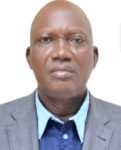


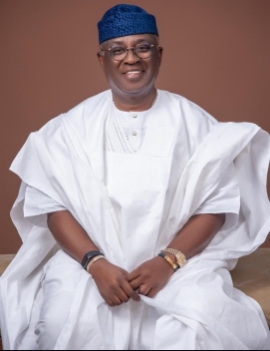
CITIZENS COMPASS— A Federal House of Representatives candidate in Lagos State’s Lekki area, Yomi Idowu, on Tuesday, observed that most public hospitals in Nigeria are overstretched, barring many residents from accessing quality healthcare.
He, however, promised to ameliorate this if voted into office.
Idowu is vying for the position under the platform of the African Democratic Congress (ADC).
Idowu is the current chairman of the Zone A Lekki Estates Residents and Stakeholders Association.
He is the former chairman of Lekki Residents Association (LERA) between September 2020 and December 2024.
Zone A Lekki covers all estates from 1004 to Victoria Garden City (VGC).
He enumerated what he intends to offer his people should he be elected to office during the 2027 elections.
The Zonal. Chairman disclosed this in a chat with Citizens Compass.
Among other things, he said his administration would restore access to quality health and education for his people.
According to him, the state of public healthcare and education in Nigeria is deeply troubling. For the ordinary Nigerian, access to quality healthcare and education is becoming increasingly difficult.
Government hospitals are often overstretched, under-equipped, and unable to provide the standard of care that citizens deserve. Public schools face similar challenges, with inadequate infrastructure, insufficient resources, and declining standards.
The alternative is supposed to be private hospitals and private schools. But for millions of ordinary Nigerians, these alternatives have become prohibitively expensive.
A child should not be denied education simply because his parents cannot afford school fees at private schools. A sick person should not have to remain at home or die because the family cannot afford the cost of a private hospital.
This situation requires urgent government intervention.
While governments work to rehabilitate and strengthen public hospitals and schools, there must be an interim support system to protect ordinary families.
The government should consider targeted subsidies for essential healthcare and education, particularly for vulnerable and low-income households.
For healthcare, the government should also establish appropriate mechanisms to ensure that essential medical services do not become completely unaffordable. Where private healthcare providers participate in government-supported programmes, there should be transparent and enforceable pricing arrangements.
Similarly, private schools that participate in government-supported education programmes could receive appropriate tax incentives or credits where they provide affordable places for children from disadvantaged families.
This would allow the government to use existing private-sector capacity while rebuilding and improving public schools.
The objective is not to destroy private enterprise. It is to ensure that no Nigerian is denied basic healthcare or education simply because of poverty.
This is where I believe the Senate must rise to the occasion.
The Senate has a constitutional responsibility to make laws, appropriate public resources, and exercise oversight over government programmes.