

…Dialogues with Lagos West on proper refuse disposal
By Bose Adelaja & Chukwudi Rosanwo
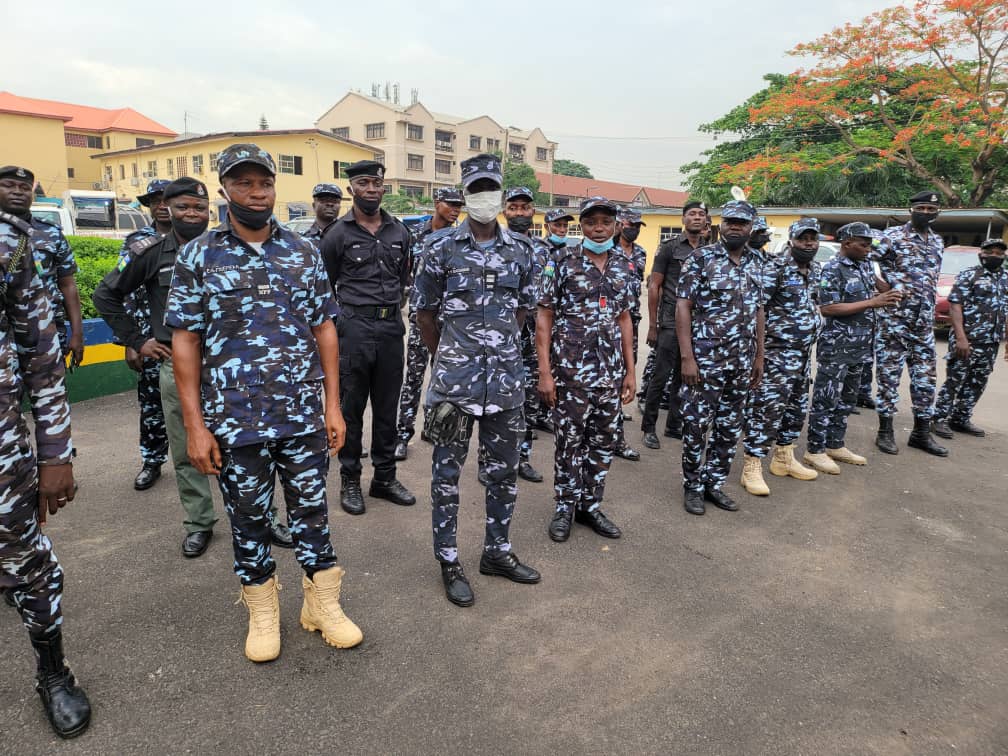
CITIZENS COMPASS— The Corps Marshal of the Lagos Environmental Sanitation Corps (LAGESC), popularly known as Kick Against Indiscipline(KAI), Major Olatunbosun Olaniyi Cole (Rtd), on Tuesday, said the State would not subject its public spaces to activities that threaten public safety and environmental sustainability.
Olaniyi Cole warned anyone who indulges in this to desist or face the music.
However, he reiterated that sustainable environmental order would not be achieved by enforcement alone but through understanding, cooperation, trust, and the active participation of members of society.
Majorlaniyi Cole (Rtd) said this at the Lagos West Senatorial Division Stakeholders’ and Community Engagement Meeting held at the Multipurpose Hall, Multi-Agency Safety Arena Complex, Bolade-Oshodi in Lagos.
Cole said the engagement marked the beginning of extensive deliberations and consultations on how best to secure voluntary environmental compliance through strengthened cooperation, understanding, and collaboration among all stakeholders.
He urged stakeholders to contribute their quota in ensuring this.
According to him, even in the military, stakeholder engagement remains a vital tool for achieving effective civil-military synergy. The same principle applies to environmental sanitation. Sustainable environmental order cannot be achieved by enforcement alone; it requires understanding, cooperation, trust, and the active participation of all members of society.
As the premier enforcement agency charged with the responsibility of enforcing environmental sanitation laws and ensuring that Lagos remains clean, safe, orderly, and conducive for living and doing business, we have remained unwavering in the discharge of our mandate.
Over the years, the gains recorded through our annual stakeholder engagements have further reinforced our commitment to strengthening collaboration, deepening community ownership, and consolidating existing efforts aimed at reducing environmental infractions across Lagos State. This is also in alignment with the THEMES+ Agenda of His Excellency, Mr. Babajide Olusola Sanwo-Olu, the Executive Governor of Lagos State, particularly the administration’s commitment to making Lagos more habitable, resilient, sustainable, and attractive for residents, investors, and businesses.
Across our 21 Divisional Beats, our officers have continued to confront environmental infractions including street trading, illegal occupation of road setbacks and public spaces, indiscriminate waste disposal, illegal dumpsites, obstruction of pedestrian and vehicular movement, open defecation and urination, and other activities that undermine environmental order. We have also continued to strengthen the capacity, discipline, health, and operational readiness of our personnel. Earlier this year, the Corps conducted the 2026 Scale A Parade Exercise, an important institutional initiative designed to assess the physical fitness and health status of our operatives and ensure that those entrusted with daily enforcement duties remain fit and capable of performing their responsibilities effectively.
Our enforcement activities have equally continued to demonstrate that Lagos State will not surrender its public spaces to activities that threaten public safety, environmental sustainability, and the orderly use of our roads and communities. At Olowu-Ipodo, for instance, following complaints and the expiration of abatement notices issued to activate voluntary compliance, KAI conducted a clearance operation against illegal trading and related vehicular and pedestrian infractions. The operation also resulted in the arrest and prosecution of three individuals for aggravated assault on a KAI operative.
These developments underscore an important principle: while our preferred approach remains voluntary compliance, the State will not hesitate to enforce the law when repeated violations persist or when the safety and wellbeing of residents and our operatives are threatened.
Another major area of our operations this year has been the sustained campaign against street begging, destitution and the unlawful occupation of major roads, bridges, traffic corridors and other public spaces.
This is an issue that requires a delicate balance between enforcement and compassion, but to ensure that major roads and public spaces remain safe and orderly while persons found to be vulnerable, particularly children and those requiring social intervention, are appropriately profiled and referred to the relevant government agencies for care, rehabilitation and other necessary interventions.
In a series of coordinated operations across Lagos in June 2026, hundreds of street beggars and destitute persons were apprehended in locations including Oshodi, Agege, CMS, Lagos Island, Ikorodu, Ikeja, Mushin, Alimosho and Falomo. Publicly reported figures from the various operations amounted to 289 arrests during the period.
In another statewide operation, the government reported that 396 beggars and destitute persons had been apprehended for profiling and appropriate intervention. The process included arrangements for the repatriation of some persons to their states of origin, while underage children were to be transferred to government shelters for care and rehabilitation.
This is the direction we want our stakeholders to understand.
Enforcement must be firm, but it must also be responsible. Where there is an environmental infraction, we will enforce the law. Where there is vulnerability, we must also show humanity. Where there is a child in need of protection, the government must intervene. And where there is an opportunity for rehabilitation and reintegration, that opportunity must be pursued.
Perhaps one of the most compelling examples of this human-centred approach occurred during our ongoing inter-agency cleanup of the Lagos-Badagry Expressway corridor. On Monday, 10 August 2026, KAI operatives discovered four young nursing mothers living with their babies at an illegal dumpsite in the Agboju area along the Lagos-Badagry Expressway. What our operatives initially approached as an environmental enforcement operation quickly became a humanitarian intervention. The women were found living in extremely deplorable and unsafe conditions within an environment characterised by refuse, poor sanitation and hazardous air quality. Most disturbing was the discovery that one of the babies was just nine days old. The four women were identified as Fareedat Muyideen, 23, from Kwara State, who was with her two-year-old child; Ayomide Ayomoke, 25, from Ondo State, with her 10-month-old baby; Amanda Oziema Abalihi, 20, from Anambra State, with her nine-day-old baby; and Chisom Ugo, 24, from Imo State, with her 11-month-old baby.Consequently, the four mothers and their babies were rescued, and medical assistance was provided as part of the intervention.
Also, the Agency in total, has rescued seven mothers and children (all under two years of age) and the last one, both mother and baby have been handed to the Amuwo-Odofin Local Government Welfare Department.This incident is a powerful reminder of why environmental sanitation is much more than clearing streets and arresting offenders.
Distinguished stakeholders, these achievements and operations demonstrate that LAGESC is not merely an enforcement agency. We are also an agency at the frontline of protecting the quality of life of Lagos residents.Government cannot station an enforcement officer on every street, in every market, at every bus stop, beside every drainage channel or in every community.This is why stakeholder collaboration is so important. Community leaders must help us educate residents. Market leaders must help us maintain order within their markets. Transport unions must support compliance among their members. Traditional institutions must continue to use their influence to promote responsible environmental behaviour. Residents must report environmental infractions and, more importantly, must refrain from creating those infractions themselves.
The media also has an important role to play in educating the public, correcting misinformation and highlighting both the responsibilities of citizens and the interventions of government.
At KAI, we firmly uphold the belief that environmental best practices are not the sole responsibility of the government. Environmental sanitation is a shared obligation that requires the active participation of community leaders, traders, transport operators, market associations, residents, traditional institutions, businesses, and every other stakeholder represented here today.
Therefore, this meeting is not simply an avenue to communicate government policies or enforcement measures. It is a platform for dialogue, listening, consultation, and the exchange of ideas on practical ways to achieve a cleaner, safer, healthier, and more orderly Lagos.We seek your honest contributions, constructive criticisms, recommendations, and continued cooperation.Together, we can strengthen the relationship between enforcement agencies and the communities we serve, reduce environmental infractions, protect vulnerable residents, and build a culture of voluntary compliance across Lagos State.Once again, I warmly welcome you all and thank you for honouring this invitation.I look forward to a fruitful, constructive and impactful engagement.
Also speaking, Mrs. Adebayor Yetunde, LAGESC Head of Department (HOD), Intelligence and Monitoring, emphasised the importance of proper environmental management strategies in maintaining a clean and healthy environment.
She explained that effective management requires proper planning, monitoring, and enforcement of environmental regulations. She said, “Individuals have an important role to play in changing people’s attitudes. We encourage everyone to maintain cleanliness in their surroundings and discourage activities that could negatively affect the environment.”
A representative of the Lagos Waste Management Authority (LAWMA), Mr. Asogba Jacob Jimoh, stated that the Agency has been collating evidence concerning the activities of some Private Sector Participants (PSPs) involved in waste management. He explained that the evidence gathered would help in identifying areas where the PSPs are found wanting. He also mentioned that progress has already been made in addressing these issues. He emphasized the need for PSPs to carry out their responsibilities effectively and ensure that waste is properly collected and managed.
A stakeholder in Oshodi, Alhaji Ismail Oyeleye, explained that one of the major problems affecting cleanliness in Lagos is the improper disposal and delayed collection of refuse. He stated that some home owners deliberately delay the collection of refuse and eventually dump it by the road side and in unauthorized areas. According to him: This contributes to environmental pollution and makes the surroundings untidy. Therefore, appropriate officers should monitor such situations and ensure that property owners dispose refuse properly.
Also, he stressed the importance of cooperation between residents, waste collectors, and government agencies in keeping Lagos clean.