



By Ola Agboola
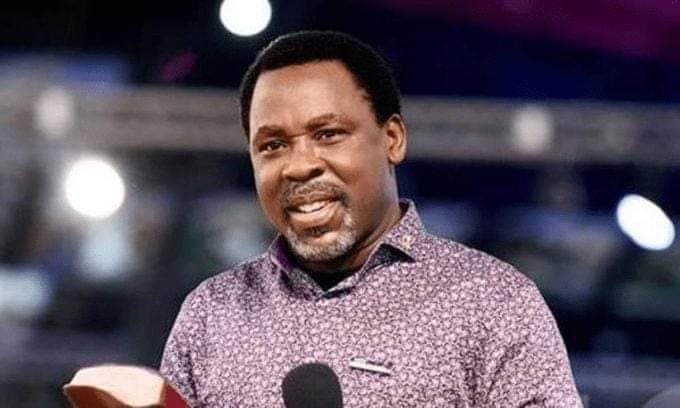
CITIZENS COMPASS— In the landscape of Nigerian Christianity, a few figures have sparked debates as the late Prophet Temitope Balogun Joshua. Love him or question him, one aspect of his life stands in stark contrast to the generation of ministers that followed him: he never used state power to fight his critics.
Despite being criticised, blasphemed, and abused man of God in contemporary Nigeria, T.B. Joshua never arrested his accusers, never intimidated his tormentors, and never dragged a detractor to court.
In an era where today’s “men of God” rush to the courthouse at the slightest whisper of defamation, the late Prophet’s posture of restraint speaks volumes. He embodied a Christ-like meekness that seems to have vanished from the modern pulpit, replaced by a reliance on “self-help” justice that contradicts the very doctrine of Christ.
Weight of silence: A Prophet under siege
During his lifetime, T.B. Joshua was a paradox. He was influential, wealthy, and highly connected, counseling presidents and kings, yet he was also a bulwark for blasphemy. He was shunned by some Christian bodies, accused of fabricating miracles, and subjected to relentless public ridicule . For a man with his resources and political capital, the temptation to silence his enemies must have been immense.
Yet, he never fought back. He did not use the long arm of the state to threaten bloggers or arrest critics. He did not file injunctions to stop broadcasts about him. In doing so, he walked the path of his Master, Jesus Christ. When Jesus was mocked, beaten, and falsely accused, His response was not to summon legions of angels or call down fire from heaven. Instead, He uttered the most powerful words of forgiveness history has ever recorded: “Father, forgive them, for they know not what they do” (Luke 23:34).
T.B. Joshua exhibited this exact life. He understood that the battle was never against flesh and blood, but against principalities. He left his reputation in the hands of God.
Biblical mandate: Vengeance is mine
The Bible is unambiguous about how believers, especially leaders, should handle persecution and slander. The Apostle Paul, writing to the Romans, quotes the Old Testament to settle the matter once and for all: “Do not take revenge, my dear friends, but leave room for God’s wrath, for it is written: ‘It is mine to avenge; I will repay,’ says the Lord” (Romans 12:19).
David, the anointed king of Israel, had the perfect opportunity to kill King Saul, his tormentor, in a cave. Yet, he stayed his hand, refusing to touch “the Lord’s anointed” (1 Samuel 26:11). David understood that if God had truly appointed him king, God would handle the logistics of getting him on the throne, even if that meant dealing with the current occupant.
T.B. Joshua operated in this realm of faith. He understood that defending oneself is a sign of distrust in God’s ability to defend. He knew that when you fight your own battles, you step outside the protective coverage of divine justice. He let God be God.
Modern paradox: The “Self-Help” Preacher
How starkly different is the landscape today. The contemporary pastors and “men of God” who fill our television screens and pulpits have abandoned the altar of prayer for the witness box of the courtroom. At the slightest hint of criticism, a defamatory tweet, a scandalous rumor, a critical podcast, they unleash a flurry of legal summonses, seeking millions in damages and criminal prosecution for cyberbullying .
They drag “unbelievers” and “infidels” to court, demanding justice for “rubbish” spoken against them. They claim their reputation is being torn apart, forgetting the words of Jesus: “Blessed are you when people insult you, persecute you and falsely say all kinds of evil against you because of me. Rejoice and be glad, because great is your reward in heaven” (Matthew 5:11-12).
Where is the rejoicing? Where is the gladness? It has been replaced by the wrath of man, which “does not produce the righteousness of God” (James 1:20).
These modern pastors seek “self-help.” They believe that God needs their legal expertise to defend His anointed. This is the doctrine of the world, not of the Cross. If Paul could endure beatings, stonings, and imprisonment without suing the Roman authorities for defamation, surely modern ministers can endure a hashtag or a blog post.
Fruit of forbearance
T.B. Joshua’s legacy is complex, but his method of handling opposition is a masterclass in spiritual maturity. He lived out the Sermon on the Mount. He turned the other cheek. He gave his cloak to those who took his tunic. He understood that the silence of the lamb confounds the wolf more than the roar of the lion.
Today, many men of God are bullying figures, using “cyber-stalking” laws as a sword to decimate their opponents . They confuse their personal ego with God’s glory. They fail to realize that when they step into the courtroom to fight a critic, they are essentially telling the world that the Cross is insufficient to protect their honor.
Prophet T.B. Joshua, whether you agree with his theology or not, lived a Christ-like ethic in this regard: He left the outcome to God.
Call to return to the Altar
To the modern-day pastors who cannot sleep until their accuser is behind bars: remember the words of Stephen as the stones flew, “Lord, do not hold this sin against them” (Acts 7:60). Remember Jesus, who stood silent before Pilate.
If you are truly called by God, He is well able to vindicate you. If your reputation is genuine, it cannot be stolen by a tweet; it can only be surrendered by your reaction. T.B. Joshua knew this. He fought the good fight by refusing to fight at all.
He let the battle be the Lord’s. And in that, he leaves a legacy that many of today’s litigious clergymen would do well to emulate. May his example of restraint challenge a generation that has traded prayer for prosecution, and faith for litigation.
May the Lord level every mountain of hatred and vengeful anger in our hearts, and free us from the prison of needing to defend ourselves, trusting that the battle is indeed His.
The writer, Ola Agboola, is a human rights activist.